

.gif)
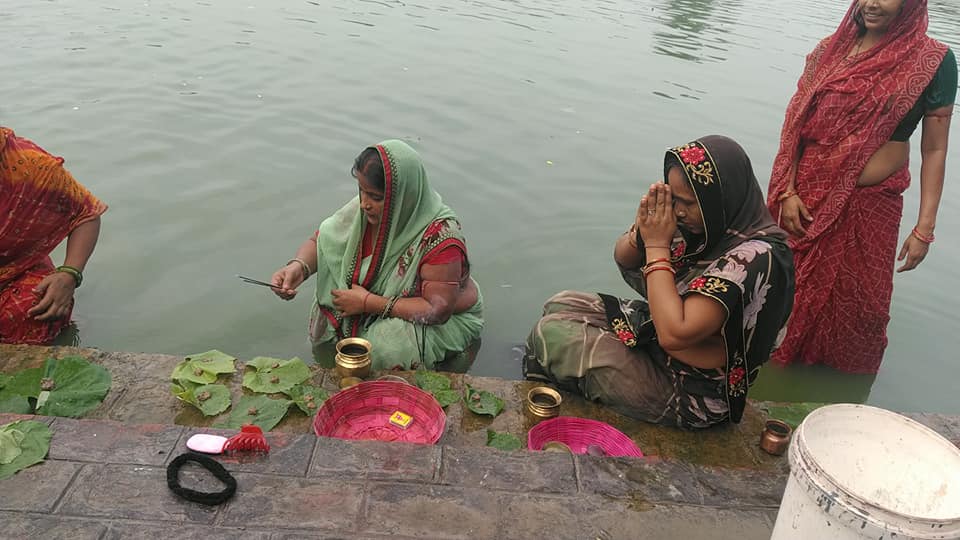

जितिया पवनी बड भारी, धियापूताके ठोकी सुतौलनी, अपने खयलनी भरि थारी......
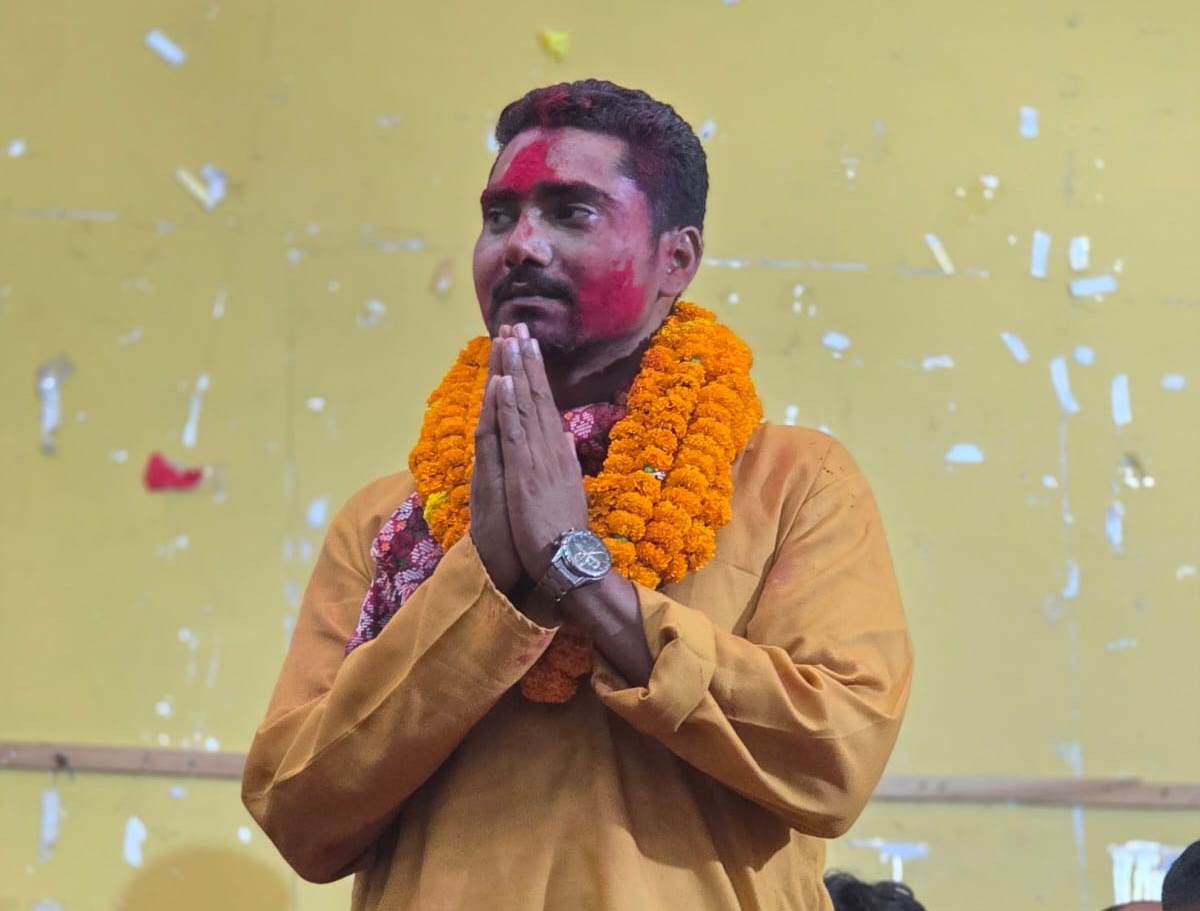
Jitiya is an important festival of Nepali married women of Mithilanchal and Tharu women of all castes. This festival is named after Masabashi’s son Jimutavahana, a blessing son of the sun, Masabashi was an unmarried princess who spent her life as hermit living in a hermitage.
Jitiya falls in a month of Ashwin, usually (September-October). It is celebrated for three days on Saptami (the sevent day), Astami (the eighth day) and Navami (the ninth day). The fasting day, Astami, is called Jitiya. The married women take brata (fast) for the good fortune for their children, husband and family. In this festival, brothers invite their married sisters to their homes, and the married women go to their maiti (maternal home).
On the first day of Jitiya, women take a bath in a river or a pound early in the morning and formally start their brata. Before taking a bath, they put khari (Oil-seed-cake), specially soil, on a leaf of sponge gourd and worship Jimutavahana, and let it flow on the river or pond. They take the remaining oil back home and massage their children with it. This khari is effused for legendary figures Chilo (eagle) and Shero (Fox) wishing them to take brata (fasting) of Jitiya.
The married women remembered their female ancestors too. On this day, scrub their house with cow-dung to make their house sacred. At the mid-night ogthan or datkhat (Special food), eat it before the cockcrow. They also eat fist and millet bread. They have curd, beaten rice, and fruits as dar. Before eating datkhat, they offer some foods to the legendary figures chilo and shero.
The second day of Jitiya is called Upas, On this day, the married women fast the whole day. They go to the river, pond, and well and make an idol of Jimutavahana made of Kush (the holy grass), and worship the idol. The devotees get together and the ones who know about Jimutavahana, narrate his story. They neither drink a drop of water nor do they have some fruits during Ashtami. During fasting hours, they sing and dance too. Their song is called Darkatoni. Everyone, married or unmarried, can participate in singing and dancing.
The third or last day of Jitiya is called Parwan. The women wake up early in the morning and go to the river to take a bath. Then they return home and perform puja. After Puja, they offer some fruits, milk, and curd to Jimutavahana, the eagle, and jackal during this festival. There is a popular story behind this.
Jimutavahana has saved the life of a baby eagle. By fasting, the eagle ensured her offspring has a long life, whereas the jackal’s offspring had a short life because the jackal did not fast. While celebrating Jitiya, Women devotees make idols of the jackal and eagle with sand or cow dung the red crimson is applied on their forehead. As a main part of the ritual, women worship nature.
The celebration of Jitiya strengthens good relationships between ethnic groups and creates harmony in a society. It creates social solidarity and helps the society function.



'१०० टकिया' नियम प्रति असन्तुष्टि, प्रधानमन्त्री बालेन्द्र शाहलाई खुला पत्र
- २०७७ भदौ २४ बुधबार
न्यूज ब्यूरो, जनकपुरधाम । नेपाल–भारतबीचको परम्परागत “बेटी–रोटी” सम्बन्धमा असर परेको भन्दै जनकपुरका एक सँचार उद्यमी एवम् व्यवसायीले प्रधानमन्त्री बालेन्द्र शाहलाई खुला पत्रमार्फत ध्यानाकर्षण गराएका छन्। उनले एक सचेत र स्वतन्त्र आम
पूरा पढ्नुहोस्